
Applio Cloud
Last update: March 24, 2026

Introduction
- This is a cloud-based alternative to run Applio, an RVC Fork, for users who do not have a powerful local PC GPU.
- Most of these options provide the exact same Web UI as the local version.
Choose your Cloud Service
Set up the program using your preferred cloud service guide. Once configured, use the Public Tunnel URL to open the interface and continue with the next steps

Google Colab Web UI
Decent performance and easiest setup for standard use.

Kaggle
Generous free GPU quotas. Great alternative if Colab is limited.

Lightning.AI
Persistent storage and powerful GPUs.

HuggingFace Space
Best for quick inference. Limited free hardware.
Google Colab No UI
No UI workflow for no ban risk on free tier and maximum resource efficiency.
Google Colab Web UI
Google Colab Service
Check the Google Colab Glossary for more info on Free Tier, Limits, Verification, Pricing and other things.
Setting Up
Access the Colab space here. Then log in to your Google account.
Execute the Install Applio cells section. This will take around 2 minutes and will require you to grant permission to use Google Drive to save your models.

- It'll finish when you see a tick symbol on the left.

- Sync with Google Drive to automatically save or load models.

Select a Sharing method and Run the Server, using a tunnel that securely exposes the application running in your private cloud environment to the public internet. The notebook gives you 3 different services to do this. Choose one from the
methoddropdown menu in the code cell.Gradio (Fast, Popular, Reliable & Default)
- How it works: This is a built-in Gradio feature. It's one of the most straightforward methods as it doesn't require any external accounts or tokens.
- Steps:
- Select "Gradio" from the
methoddropdown menu. - Run the cell. The public Gradio URL (ending in
gradio.live) will be printed in the output once the server is ready. Click on it to access the Web UI.
- Select "Gradio" from the
Ngrok (Fast, Popular & Reliable)
- How it works: Ngrok is a popular service that creates secure tunnels. It requires a free account and an authentication token. It has a 1GB Bandwidth Free Monthly Limit.
- Steps:
- Go to the Ngrok Dashboard to get your free authtoken.
- In the notebook cell, paste your token into the
ngrok_tokenfield. - (Optional) To potentially reduce latency, select a geographical
Regionfrom the list of parameter options next to it, that is closest to you. - Run the cell. The public Ngrok URL (ending in
ngrok.io) will be printed in the output once the server is ready. Click on it to access the Web UI.
LocalTunnel (No Account, Password Protected)
- How it works: LocalTunnel is another free service that doesn't require an account. For security, it generates a unique URL that is protected by a password.
- Steps:
- Select "LocalTunnel" from the
methoddropdown menu. - Run the cell.
- The output will display two key pieces of information: the public URL (ending in
loca.lt) and aLocal Tunnel Passwordbelow it. - Click the URL. A new page will ask for a password.
- Copy the password from the notebook output and paste it into the password prompt in your browser to access the Web UI.
- Select "LocalTunnel" from the

Kaggle
Kaggle Service
Check the Kaggle Glossary for more info on Free Tier, Limits, Verification, Pricing and other things.
Account Setup
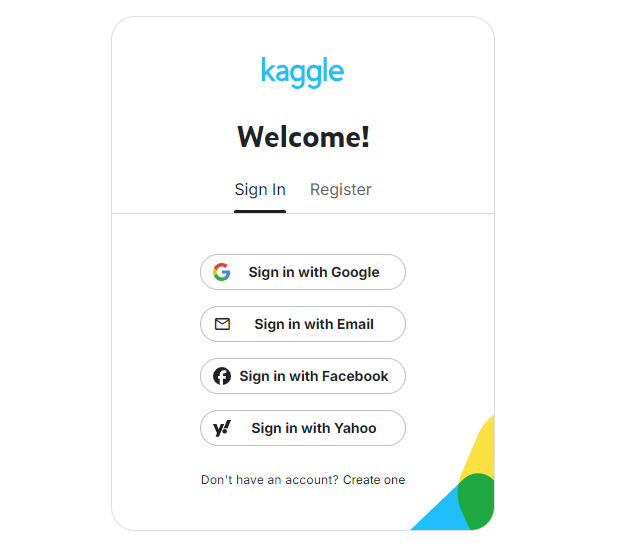
- Start by making an account here.
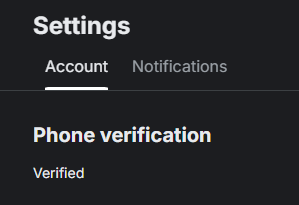
- Verify your account with a phone number. This is required to enable the "Internet" option in your notebooks, which is necessary for downloading models and dependencies.
Notebook Creation & Setup
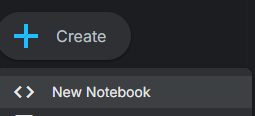
- Go to Kaggle and click Create then New Notebook at the top left.
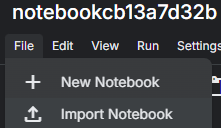
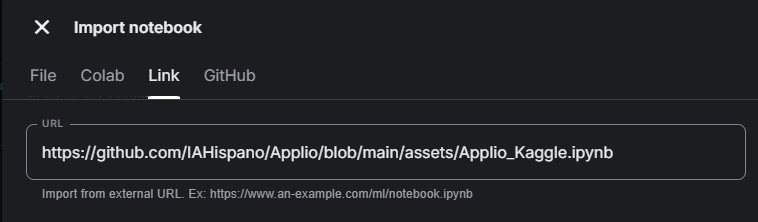
- Under your session's name click File then Import Notebook.
- In the new window, click the Link tab and paste the following URL into the box:
https://github.com/IAHispano/Applio/blob/main/assets/Applio_Kaggle.ipynb. Click Import on the bottom right once you've done this.
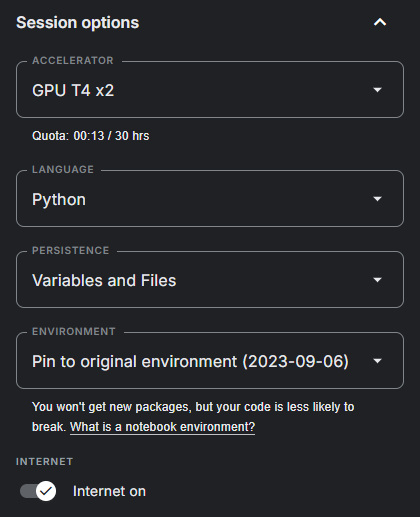
- In the sidebar on the right, under "Session options", turn on the Internet switch. Make sure persistence is set to Files and variables.
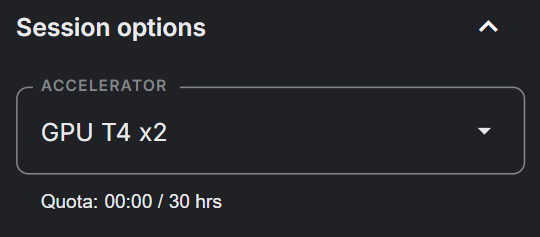
- Under "Accelerator", select the T4 x2 GPU.
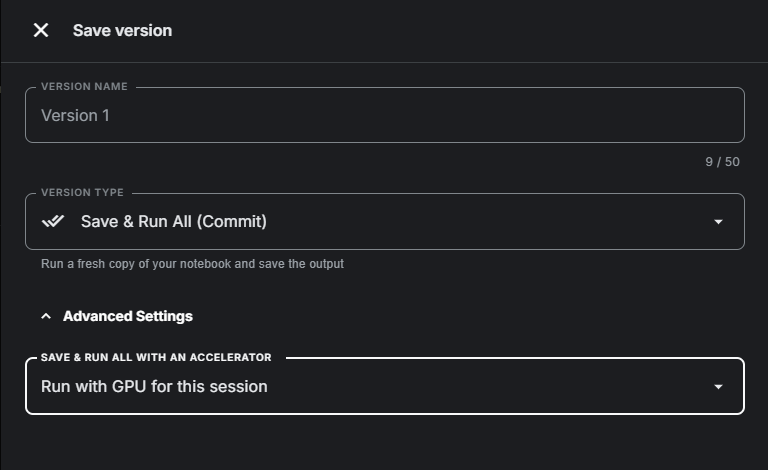
- (Optional) To ensure your session doesn't time out during long training processes, you can enable "Save version". Go to the top right, click Save version, and choose Save & Run All (Commit) from the dropdown. In the advanced settings, select Always save output for the notebook.
Installation & Tunnels Setup
- Start by running the first few cells of the notebook to install the necessary dependencies.
- Configure and Run Tunnels: The next cell is for setting up the tunneling service, which exposes the Applio interface to the internet. Choose one from the
Tunneldropdown menu. - Ngrok (Recommended & Default method): Requires a free account and an authentication token. Paste your token into the
ngrok_authtokenfield, select "Ngrok", and run the cell. - Gradio + LocalTunnel (No Account & Password Protected): Uses Gradio's built-in tunnel for the main Applio interface and LocalTunnel for Tensorboard. Select this, run the cell, and use the provided password for LocalTunnel links.
- LocalTunnel (No Account, Password Protected): Generates a unique URL protected by a password. Select this, run the cell, and copy the
LocalTunnels Passwordfrom the output. - Horizon (Fast, Requires Account & ID): Requires a free account and a personal ID. Go to the Horizon Dashboard, copy your ID, paste it into
horizon_id, and run the cell. - Once configured, run the cell. The output will print public URLs for Applio, Tensorboard, and the Filebrowser. Click the Applio link to open the Web UI.
Lightning.AI
Lightning.AI Service
Check the Lightning.AI Glossary for more info on Free Tier, Limits, Verification, Pricing and other things.
Create an Account
- First, make an account with Lightning Ai.
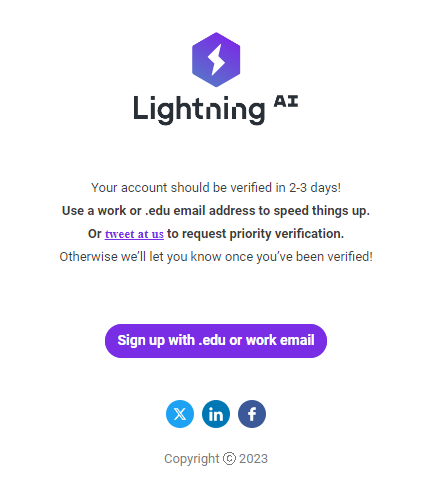
- Make sure you verify yourself with a phone number. Once you've done that you will get an email that looks like this:
Verification Time
You will need to wait 2-3 business days to become fully verified.
Studio Setup & Installation
- After creating your Lightning.AI account, open the Applio Notebook Studio and Clone it.
- Activate/Switch GPU: If you aren't on a GPU environment by default, you must switch to a GPU environment. On the right-hand lateral menu, click on Studio Environment (the processor icon).
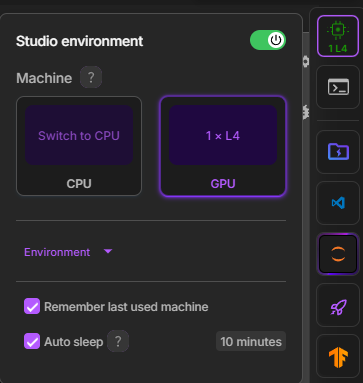
- Click Switch To GPU, select an available GPU, and wait for the environment to restart.
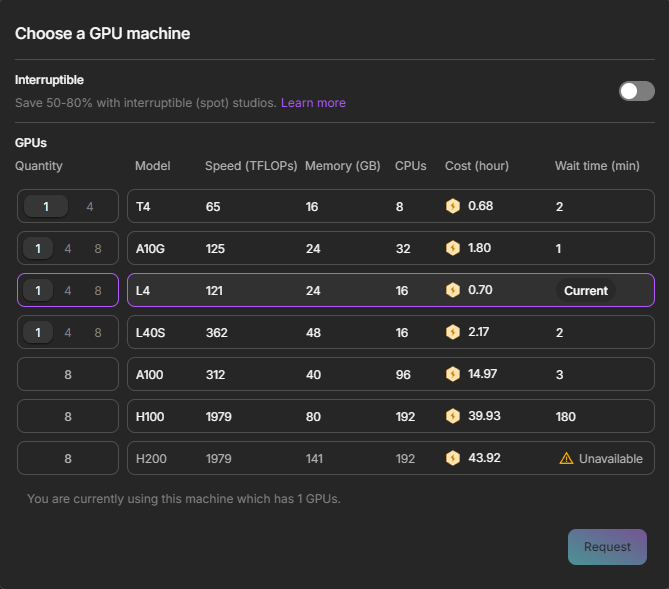
Free GPU Credits List:
- 75 hours monthly of T4 16gb
- 31 hours monthly of L4 24gb
- 15 hours monthly of L40 48gb
- Run the first code cell to download the latest version of Applio and install necessary dependencies. It will print "Installed!" when finished.
Tunnels & Server Setup
- Launch the Server via Tunnels: Navigate to the third code cell, titled "Start Server using Tunnels". Choose one from the
Tunnelcode menu in the code cell. - Port Viewer (Recommended & Default method): A built-in Lightning.AI feature. Select "Port Viewer". Click the
+at the bottom of the right tab, click on Web Apps and install Port Viewer. Run the cell. In the right-hand sidebar, click the Web Apps tab, click Port Viewer -> Add a new port. Enter18888and click your Port to open it. - Gradio (Fast, Popular & Reliable): Select "Gradio" and run the cell. Click the
.gradio.livelink in the output. - Ngrok (Fast, Popular & Reliable): Get your Ngrok authtoken, paste it into the
Tokenfield, and run the cell. - Cloudflare (Easy, No Account Needed): Select "Cloudflare" and run the cell. A
.trycloudflare.comlink will appear. - LocalTunnel (No Account, Password Protected): Select "LocalTunnel" and run the cell. Copy the
Local Tunnel Passwordand use it on the generated link. - Horizon (Fast, Requires Account & ID): Go to the Horizon Dashboard, copy your ID, paste it into the
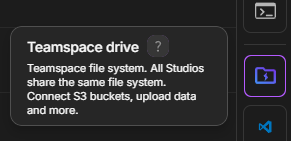
Tokenfield, and run the cell. - Accessing Files manually: Find the Teamspace Drive button on the right sidebar and click it. The path to Applio is
Studio > this_studio > Applio > Applio. You can drag, drop, and download files directly from here.
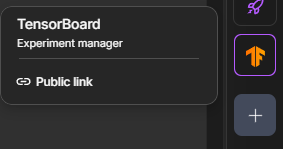
- Opening the TensorBoard: Find the TensorBoard icon on the right sidebar, click it, and start it to monitor your training visually.
- Opening the notebook: If you want to go back to the code view, simply click on the
Jupytericon on the right sidebar.

- Maintenance: If you need to update the Program or start fresh, you can run the final cell in the notebook, "Delete everything". This will remove all downloaded files and configurations from your persistent storage, allowing for a clean installation by re-following the notebook with perhaps a changed branch variable.
HuggingFace Space
HuggingFace Space Service
Check the HuggingFace Space Glossary for more info on Free Tier, Limits, Quotas and other things.
HuggingFace Space Limits
- The ApplioX HuggingFace Space doesn't have Training, Realtime, or Plugin tabs. It is for Inference only.
- RVC HuggingFace Spaces frequently get paused without warning.
RVC HuggingFace Spaces Pausing Issue
Please be aware that HuggingFace has recently been pausing RVC-related Spaces without providing any reason.
Open the ApplioX HuggingFace Space.
The Web UI will load directly in your browser without any installation required.
Web UI Usage
Once you have the Web UI running via your chosen Cloud Provider (Colab, Kaggle, Lightning.AI, or ApplioX), the rest of the process is identical to using a local installation.
Use the Local Guide below for detailed instructions on Inference, Training, TTS, and Plugins.
Google Colab No UI Usage
This is a strictly code-based workflow for users who want to maximize Colab resource efficiency and avoid potential bans on the free tier by not loading a Web UI.
Note on Updates
Because this workflow relies directly on executing notebook cells rather than a stable Web UI, the notebook's structure and variable names might change frequently between updates.
- Open the Applio No UI Colab and run the
Installationcell.

2. Preprocess Dataset: Name your model, upload your dataset to Google Drive, paste the path in dataset_path, select your sample rate, and run the cell.

3. Extract Features: Choose your f0_method (RMVPE recommended) and run the cell.
4. Training: Set the total_epoch, choose your batch_size (8 recommended), enable cleanup (if this is a fresh run), and tick save_only_latest. Run the cell to start training!

5. Resuming: If you get disconnected, enter the exact model name from before, run the first two cells, select your sample rate/f0, and run the final training cell again.
Troubleshooting
- In case the public URL doesn't show up, Gradio might be down. Check here.
- To bypass this, use other tunnels depending on the cloud service you're using (such as Ngrok, LocalTunnel, or Cloudflare).
- You have exhausted the Free Cloud GPU. You will need to wait for it to reset, pay or switch to a different account.
- If it's lower than 32k: select
32k. - If it's 44.1k: select
40k. - If it's higher than 48k: select
48k.
- Report your issue here.